EV chargingBuilding & upgrades
EV charging in HOAs and condos: where the board can't just say no
In six states, including California and Illinois, an HOA or condo board that lets an owner's EV charger application sit for 60 days without a written refusal is treated by law as having approved it. We found right-to-charge laws for community associations in 10 states, and the details decide who pays, who installs and where the charger can go.
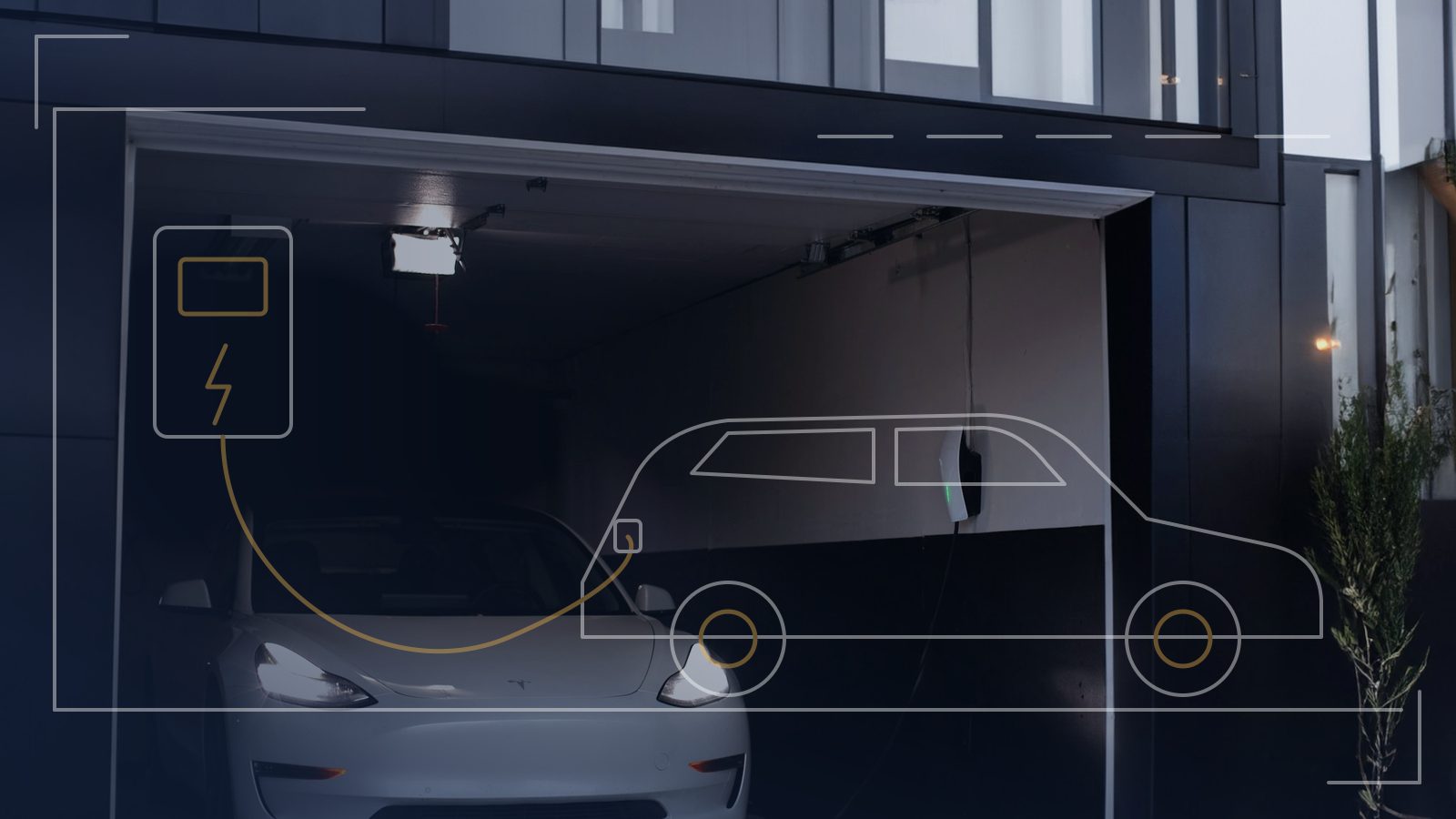
- We found right-to-charge laws for HOAs, condos or both in 10 states and checked each in official state legislative sources: CA, CO, FL, IL, MD, MA, NJ, OR, VA and WA.
- California, Illinois, Maryland, Massachusetts, New Jersey and Washington treat an application as approved if it isn't refused in writing within 60 days.
- The usual deal: the owner pays for the charger, its installation, its electricity and its upkeep, and the board can set reasonable rules.
- Virginia's rules give way where the recorded declaration or condo instruments say otherwise (55.1-1823.1; 55.1-1962.1).
- From October 1, 2026, Maryland governing documents can't unreasonably stop a board installing chargers in common parking spaces (2026 Laws of Maryland, Ch. 753).
Ten states with a right-to-charge law
These are the laws we could read on each state's official legislature site, or in official legislative documents, as at November 2026. "Deemed OK" means an application not refused in writing within 60 days counts as approved, unless the delay comes from a reasonable request for more information.
| State | Law | Covers | Deemed OK at 60 days? |
|---|---|---|---|
| California | Civil Code 4745 | HOAs and condos (common interest developments) | Yes |
| Colorado | C.R.S. 38-33.3-106.8 | HOAs and condos under CCIOA | Not in the 2023 amendments we read |
| Illinois | 765 ILCS 1085/30 (P.A. 103-0053) | Condos and common interest communities | Yes |
| Oregon | ORS 94.762; ORS 100.627 | HOAs; condos | Board must approve within 60 days |
| Washington | RCW 64.90.513 | HOAs and condos | Yes |
| State | Law | Covers | Deemed OK at 60 days? |
|---|---|---|---|
| Florida | Fla. Stat. 718.113(8) | Condos (not HOAs) | No time limit in the section |
| Maryland | Real Prop. 11-111.4; 11B-111.8; Corps. & Ass'ns 5-6B-23.1 | Condos; HOAs; co-ops | Yes |
| Massachusetts | G.L. c.183A, s.10A | Condos, HOAs and co-ops | Yes |
| New Jersey | N.J.S.A. 45:22A-48.4 (P.L.2020, c.108) | Planned real estate developments | Yes |
| Virginia | 55.1-1823.1; 55.1-1962.1 | HOAs; condos | No time limit in the sections |
Washington's rule reaches older associations too: RCW 64.90.365(1)(f) applies it to most communities created before July 1, 2018, alongside the newer ones.
What a board can ask an owner to do
The laws share a pattern: a board can usually require an application, reasonable architectural rules, a qualified installer, insurance and payment for power. The details:
- Who installs. Florida allows boards to require a licensed and registered firm familiar with charger installation (718.113(8)(h)3). Oregon requires at least a journeyman electrician's license (ORS 94.762(4); 100.627(4)). Massachusetts requires a licensed contractor or electrician (c.183A, s.10A(c)). Illinois refers to a licensed and insured electrical contractor for common-area installs (s.30).
- Insurance. Florida and Virginia condos can ask for a certificate naming the association as an additional insured within 14 days of approval (718.113(8)(h)4; 55.1-1962.1 C.9). New Jersey sets a $100,000 homeowners liability policy, with the association named as certificate holder (P.L.2020, c.108, s.1(d)(6)). Oregon requires a $1 million policy where an owner-owned charger isn't a certified electrical product (ORS 94.762(8); 100.627(8)). Washington exempts single-family style communities from its insurance certificate rule (64.90.513(4)(c)).
- Who pays for power. Florida requires separate or embedded metering paid by the owner (718.113(8)(c)). Massachusetts requires connection to the owner's own utility account unless the licensed installer finds that impossible, in which case the owner can use the common account and reimburse the association (c.183A, s.10A(e)).
- Looks and placement. Rules on size, placement and appearance are allowed, but in California, Washington, Massachusetts and Oregon a restriction can't significantly increase the cost or significantly cut the charger's efficiency or performance. Florida's standards can't "substantially increase the cost" (718.113(8)(h)2).
In New Jersey and Oregon, if chargers push the building's electrical supply to its limit, the association can charge the cost of the upgrade to the owners who have chargers or have applied for them.
That upgrade rule appears in ORS 94.762(6) and 100.627(6), and in P.L.2020, c.108, s.1(d)(3). Section 1(c) of the New Jersey act also lets a board hold applications until the upgrade is done.
What a board can't do
In the states above, a blanket ban on chargers in an owner's own space is off the table, though each law has its own limits.
- No placement fees. Washington and Massachusetts bar fees for the placement of a charger. A processing fee is allowed in those states where the association charges one for all architectural applications (RCW 64.90.513(3)(d); c.183A, s.10A(d)).
- No parking bans. Colorado's 2023 amendments stop associations restricting parking because a vehicle is a plug-in hybrid or electric, and, subject to exceptions in the section, protect a Level 1 or Level 2 charger in a unit, an assigned or deeded space, or a space shared with other owners (C.R.S. 38-33.3-106.8(2), as amended by House Bill 23-1233).
- Penalties. A willful violation can cost a California or Washington association actual damages plus a civil penalty of up to $1,000, and the owner's attorney fees if the owner wins (Civil Code 4745(j), (k); RCW 64.90.513(10)). In Illinois the penalty is up to $500 (s.30).
There are still grounds for a no. A New Jersey association can refuse a charger it reasonably concludes is a life-safety risk (s.1(d)(2)). A Virginia condo can refuse where installation isn't technically feasible or reasonably practicable because of safety, structural or engineering conditions (55.1-1962.1 B). Florida installations can't cause irreparable damage to the condominium property (718.113(8)(b)).
Virginia's HOA rule has two limits: it applies "except to the extent that the declaration or other recorded governing document provides otherwise," and an HOA may prohibit or restrict chargers on the common area (55.1-1823.1 A, B).
If your state has no right-to-charge law
In a state without a right-to-charge law, the answer sits in your declaration, bylaws and architectural rules. That doesn't mean the answer is no. Worth asking about:
- Whether a charger counts as an architectural change, and what the application process and timeline are.
- Whether the board will grant a license over a parking space or a cable route, on terms set in writing.
- Whether a plain outlet in an assigned space needs approval at all.
- Whether the owners would vote on a rule change, or on a shared charger project, at the next meeting.
A written application with a site plan, the charger's specification sheet, an electrician's assessment of the panel, and an offer to pay for metering, insurance and removal gives a board something concrete to decide. Keep a copy and proof of the date it arrived.
Before anyone signs the electrician's quote
Garage chargers often need new conduit, a sub-panel or a load study, and quotes vary widely in what they include. Before you or your board signs, the free bid check lets you photograph or upload the bid and get a plain-English second opinion: what's missing and the questions to ask before anyone signs. Washington, Massachusetts and Colorado owners can find more in the Washington, Massachusetts and Colorado guides.
Questions people ask
Can my HOA stop me installing an EV charger?
In California, Colorado, Illinois, Maryland, Massachusetts, New Jersey, Oregon and Washington, an association can't ban a charger in an owner's own unit or designated parking space, subject to each law's exceptions, though it can set reasonable rules. Florida protects condo owners but not HOA owners. Virginia's protection applies unless the recorded declaration or condo instruments provide otherwise. Where no state law applies, your governing documents decide.
How long does an HOA have to approve an EV charger?
In California, Illinois, Maryland, Massachusetts, New Jersey and Washington, an application not refused in writing within 60 days is deemed approved, unless the delay comes from a reasonable request for more information. Oregon requires the board to approve a complete, compliant application within 60 days. Keep proof of the date your application arrived.
Who pays for the electricity for a condo EV charger?
Under the laws we read, the owner does. Florida requires separate or embedded metering paid by the owner. Massachusetts requires the charger to be on the owner's own utility account unless the installer finds that impossible, in which case the association can bill the owner back for the power used.
Do I need extra insurance for an EV charger in a condo?
It depends on the state. Florida, Virginia, California and Illinois let associations ask for a certificate of insurance within 14 days of approval. New Jersey sets a $100,000 homeowners liability policy. Oregon requires $1 million of liability cover where an owner-owned charger isn't a certified electrical product.
General information only, not legal advice. HOA and condo law differs from state to state and changes; check your governing documents and your state's current law, and ask a licensed attorney about your own situation.
Related:
Sources
- Florida Statutes 718.113 (2026), subsections (8) and (9). The Florida Legislature (Online Sunshine), 2026 Florida Statutes, read November 2026. leg.state.fl.us/statutes/index.cfm?App_mode=Display_Statute&URL=0700-0
- SB 1267 (Allen) analysis, existing law under Civil Code 4745. California Senate Judiciary Committee, Hearing date April 28, 2026. sjud.senate.ca.gov/media/2136
- RCW 64.90.513 Electric vehicle charging stations. Washington State Legislature, As amended by 2026 c 96, read November 2026. app.leg.wa.gov/RCW/default.aspx?cite=64.90.513
- General Laws c.183A, s.10A, Installation of electric vehicle supply equipment. The 194th General Court of Massachusetts, Read November 2026. malegislature.gov/Laws/GeneralLaws/PartII/TitleI/Chapter183A/Section10
- ORS chapter 94, section 94.762 (planned communities). Oregon State Legislature, 2025 edition. oregonlegislature.gov/bills_laws/ors/ors094.html
- ORS chapter 100, section 100.627 (condominiums). Oregon State Legislature, 2025 edition. oregonlegislature.gov/bills_laws/ors/ors100.html
- House Bill 23-1233, Session Laws Chapter 245 (amending C.R.S. 38-33.3-106.8). Colorado General Assembly, 2023. leg.colorado.gov/sites/default/files/documents/2023A/bills/sl/2023a_sl
- Public Act 103-0053, Electric Vehicle Charging Act. Illinois General Assembly, 2023. ilga.gov/ftp/Public%20Acts/103/103-0053.htm
- P.L.2020, c.108 (A3367), EV charging stations in common interest communities, C.45:22A-48.4. New Jersey Legislature, Approved October 19, 2020. pub.njleg.gov/bills/2020/AL20/108_.HTM
- RCW 64.90.365 Common interest communities, exceptions. Washington State Legislature, Read November 2026. app.leg.wa.gov/RCW/default.aspx?cite=64.90.365
- Code of Virginia 55.1-1823.1 (HOAs). Virginia General Assembly, Legislative Information System, Read November 2026. law.lis.virginia.gov/vacode/title55.1/chapter18/section55.1-1823.1/
- Code of Virginia 55.1-1962.1 (condominiums). Virginia General Assembly, Legislative Information System, Read November 2026. law.lis.virginia.gov/vacode/title55.1/chapter19/section55.1-1962.1/
- HB 110 Fiscal and Policy Note, Electric Vehicle Recharging Equipment for Multifamily Units Act. Maryland Department of Legislative Services, 2021 session. mgaleg.maryland.gov/2021RS/fnotes/bil_0000/hb0110.pdf
- 2024 Laws of Maryland, Ch. 268 (HB 159), Electric Vehicle Recharging Equipment Act of 2024. Maryland General Assembly, Effective October 1, 2024. mgaleg.maryland.gov/2024RS/Chapters_noln/CH_268_hb0159e.pdf
- 2026 Laws of Maryland, Ch. 753 (HB 405). Maryland General Assembly, Effective October 1, 2026. mgaleg.maryland.gov/2026rs/Chapters_noln/CH_753_hb0405t.pdf
- 765 ILCS 1085/30 Electric vehicle charging system policy for associations. Illinois General Assembly, Source: P.A. 103-53, eff. 1-1-24; read November 2026. ilga.gov/legislation/ilcs/documents/076510850K30.htm
- 765 ILCS 1085/10 Applicability (section 30 applies to new and existing homes and buildings). Illinois General Assembly, Source: P.A. 103-53 and 103-572, eff. 1-1-24; read November 2026. ilga.gov/legislation/ilcs/documents/076510850K10.htm
Checked against these sources on November 28, 2026.